Algorithm Visualizer
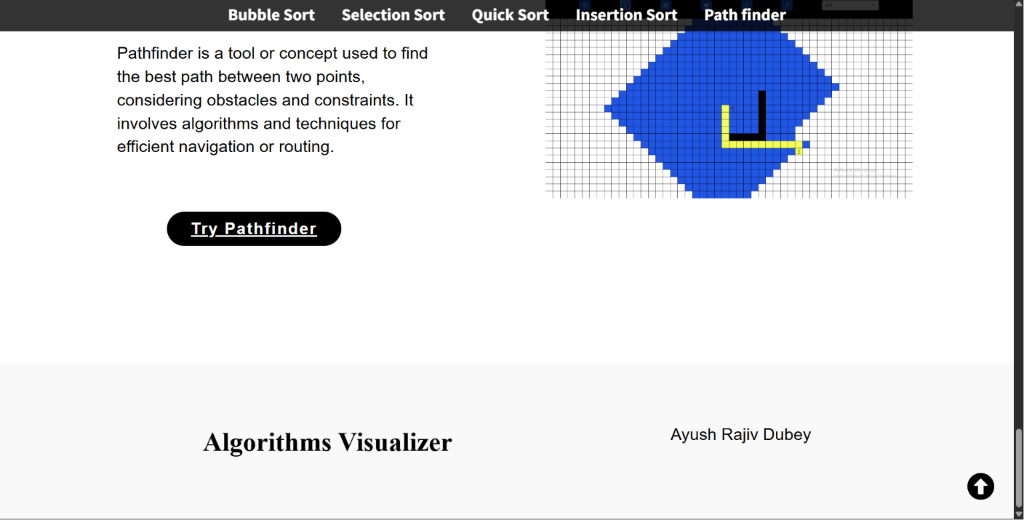
An interactive platform for visualizing common sorting and pathfinding algorithms with configurable parameters, built with JavaScript and TypeScript.
Visit website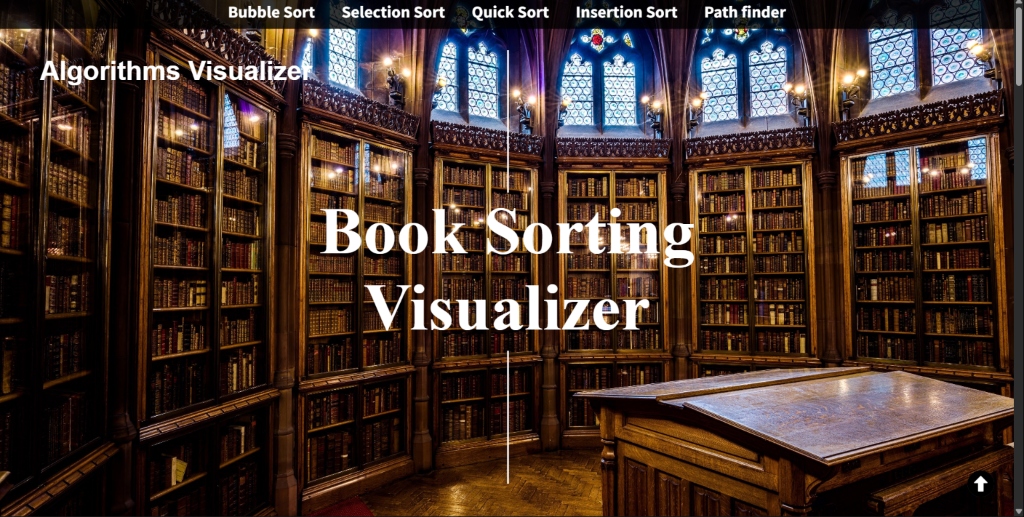
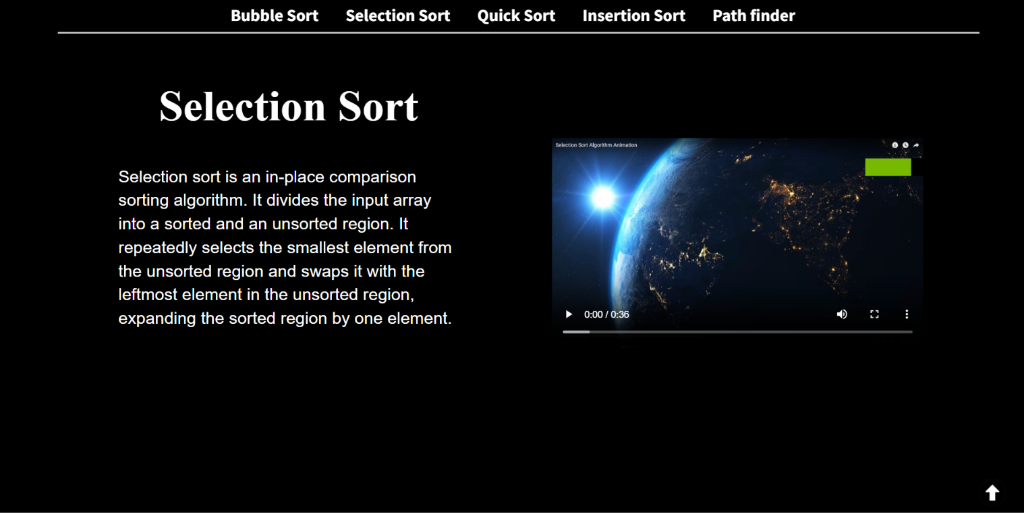
Interactive visualization
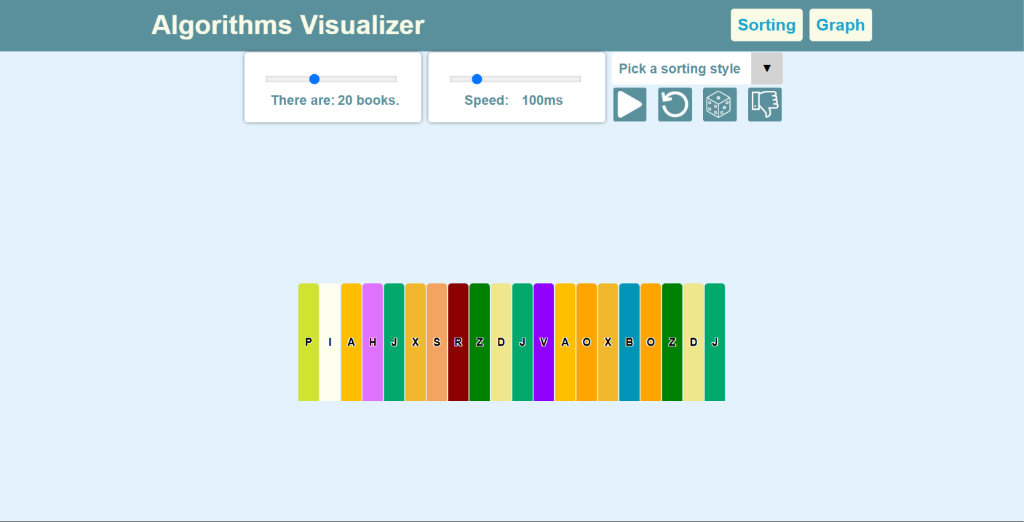
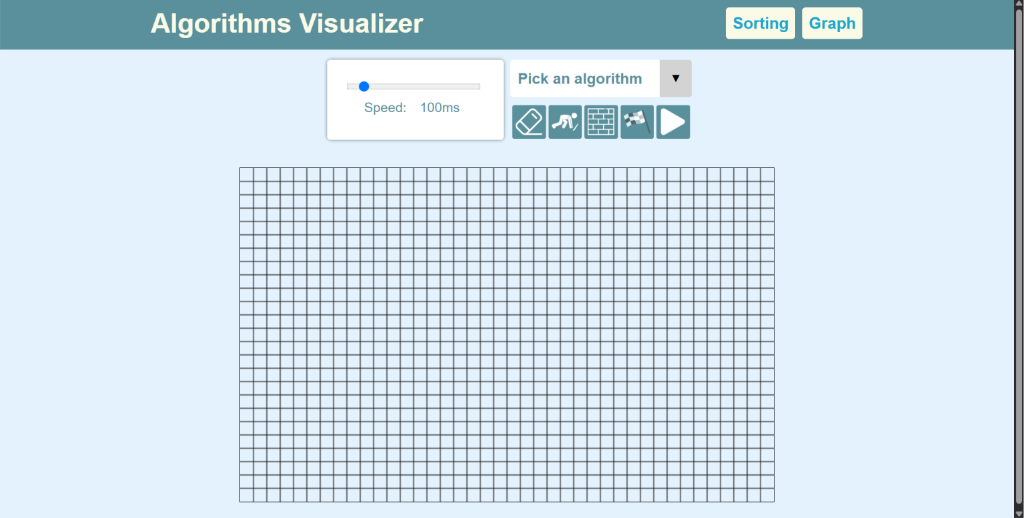
The platform visualizes common sorting and pathfinding algorithms with configurable parameters for up to 500 elements. Users can adjust array sizes, animation speeds, and algorithm selection to better understand how different algorithms behave under varying conditions.
Each algorithm step is animated in real time, making it easy to follow the logic and compare the efficiency of different approaches visually.
Performance optimization
Rendering and computation logic were optimized to reduce processing overhead by 30%. The application uses efficient DOM manipulation and requestAnimationFrame for smooth animations, resulting in a 30-minute average session length and a 4.6/5 user rating.
Algorithm details
Each algorithm visualization includes step-by-step annotations showing comparisons, swaps, and element movements. Users can pause at any point to inspect the current state of the data structure, making the platform an effective learning tool for data structures and algorithms.
Project outcomes
The Algorithm Visualizer serves as an interactive educational tool that makes complex algorithms accessible and engaging. With support for up to 500 elements and optimized rendering, users can explore sorting and pathfinding algorithms with real-time visual feedback, achieving strong engagement metrics with a 4.6/5 rating and 30-minute average sessions.