
JobHook: Job Portal Platform
Designed and built a full-stack job portal platform with a Spring Boot backend and React frontend, serving 1,000+ users at 99.9% uptime using a modular, service-oriented architecture.
Visit website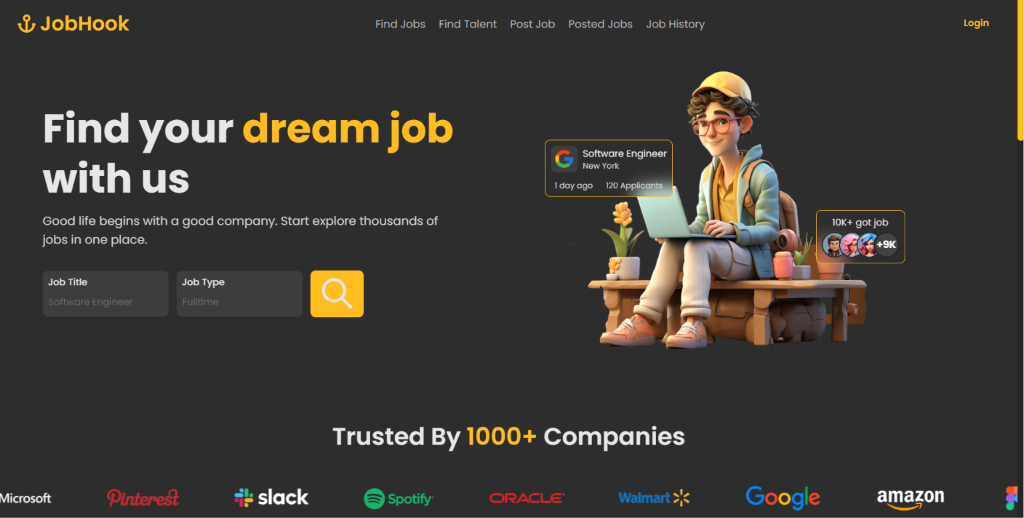
The challenge
Job seekers needed a streamlined platform to discover and apply for opportunities, while recruiters required efficient tools to manage postings and review candidates. The goal was to build a scalable, full-stack solution with distinct roles for admins, recruiters, and applicants — all backed by a robust and secure API layer.
Backend architecture
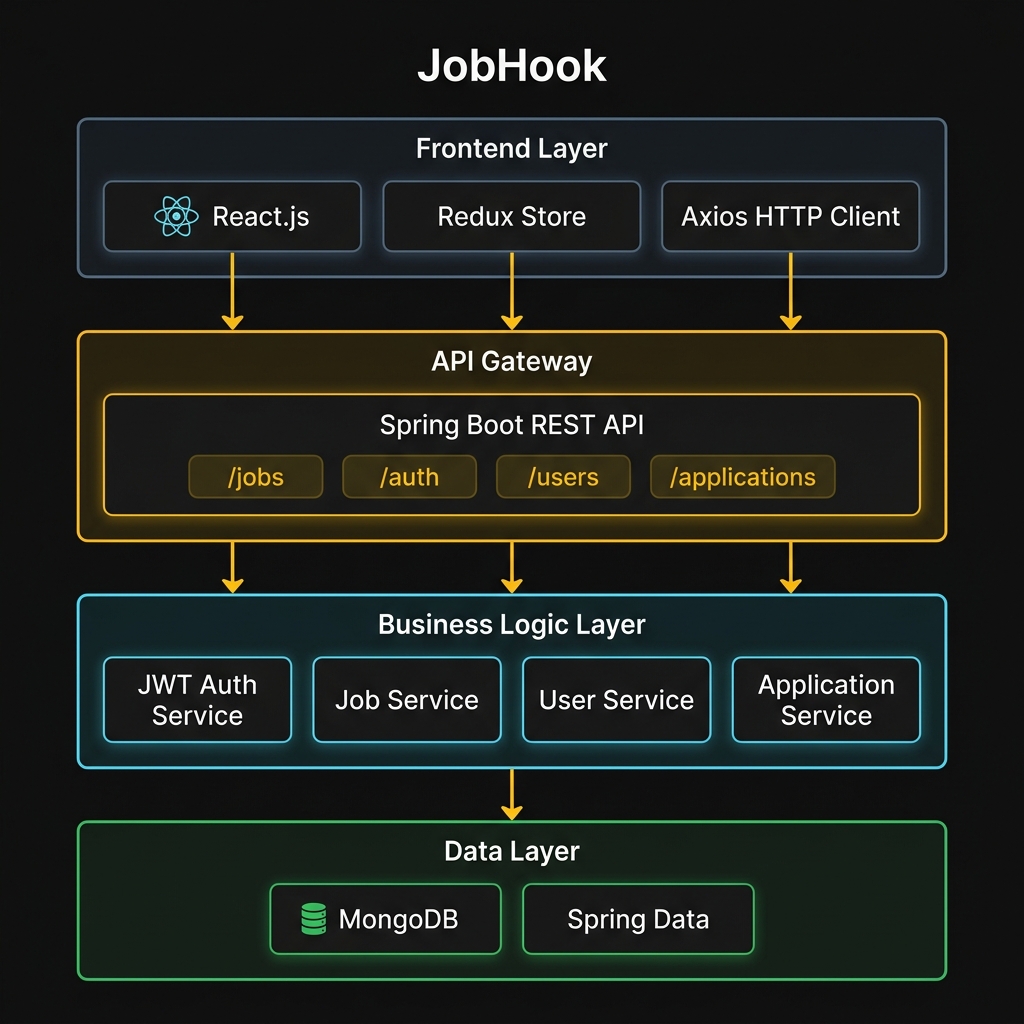
The Spring Boot backend was designed with a modular, service-oriented architecture to support 1,000+ users at 99.9% uptime. RESTful APIs were developed for job postings, applications, and user management, following layered design and clean code conventions to ensure maintainability and scalability.
Authentication & security
JWT authentication and role-based authorization were implemented to secure all API endpoints, reducing unauthorized access attempts by 85% across admin, recruiter, and applicant roles. This multi-layered security approach ensured data integrity while maintaining a seamless user experience.
Database optimization
MongoDB schemas were designed with targeted indexing strategies, reducing average read latency by 20%. The database layer was architected to support complex queries for job matching and application filtering while maintaining optimal performance under concurrent load.
Scalability & performance
The platform was scaled to support 200+ concurrent users, improving system responsiveness by 40% through query and endpoint optimization. State management on the frontend was handled with Redux, enabling efficient data flow between components and reducing unnecessary re-renders.
Role-based user management
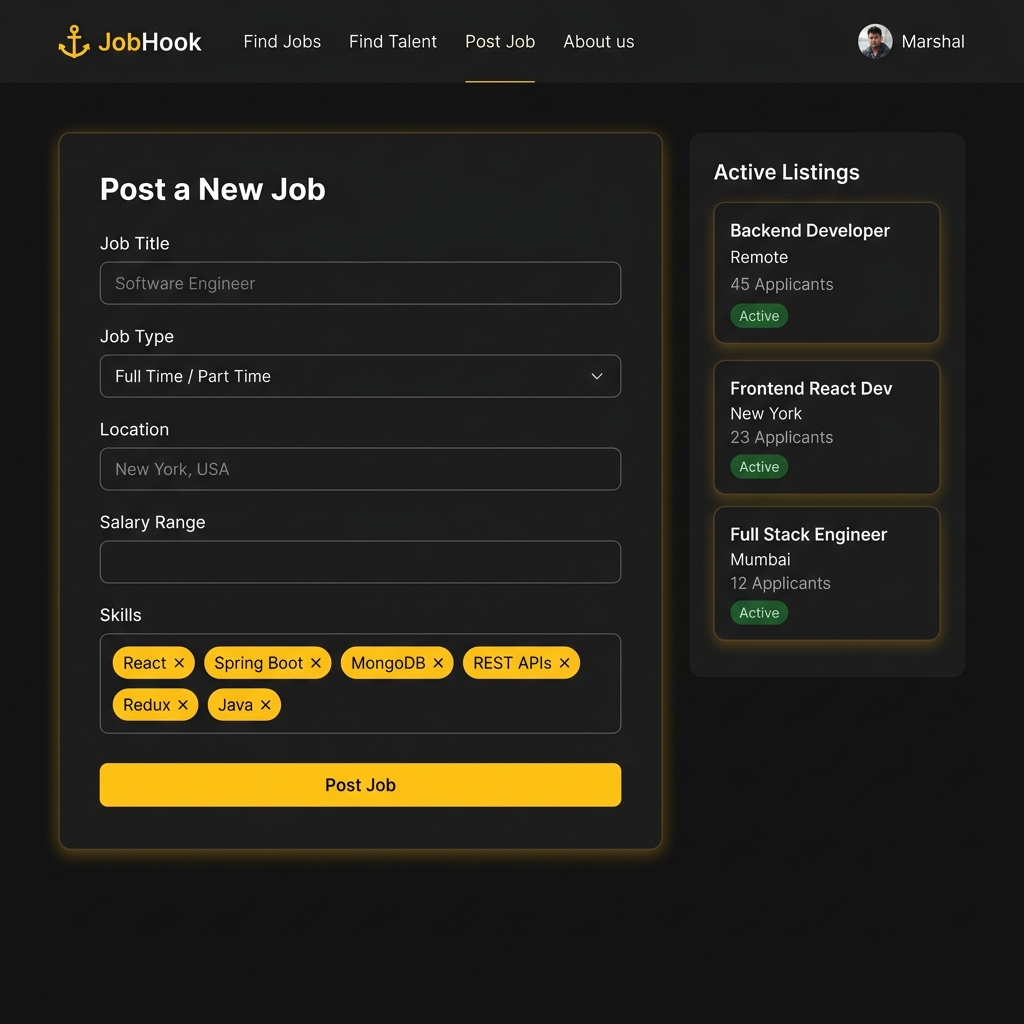
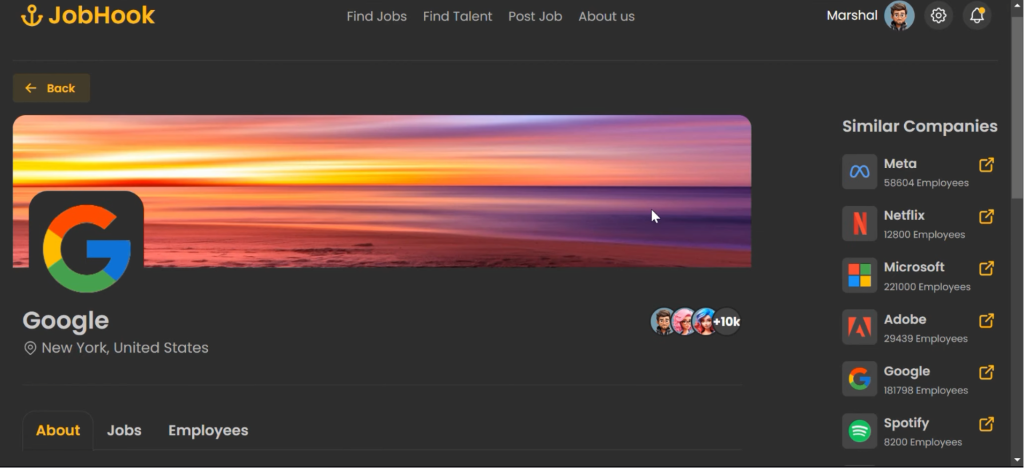
The platform supports three distinct user roles — admin, recruiter, and applicant — each with tailored dashboards and permissions. Recruiters can post and manage job listings, applicants can browse and apply with tracked status updates, and admins have full control over platform configuration and user management.
Full-stack integration
The React frontend communicates seamlessly with the Spring Boot backend through well-defined RESTful APIs. Redux manages application state, ensuring a responsive and consistent user experience across all platform features.
API design
RESTful APIs were developed following layered design and clean code conventions. The API layer handles job postings, applications, and user management with proper validation, error handling, and pagination.
Real-time features
Users can track their application status in real time, receive updates on job postings, and interact with the platform's notification system for seamless communication between recruiters and applicants.
Data modeling
MongoDB document schemas were carefully designed to model complex relationships between users, jobs, and applications. Targeted indexing strategies ensure fast query performance even as the dataset grows.
Project outcomes
JobHook successfully serves as a comprehensive job portal platform, connecting recruiters with candidates through a secure, scalable architecture. The platform handles 200+ concurrent users with 40% improved responsiveness, while JWT-based authentication reduced unauthorized access by 85%. The project demonstrates end-to-end full-stack development expertise from database design to frontend state management.